OS-7645
Extremely Rare J. P. Murray Carbine
$35,000.00

OS-7645
$35,000.00
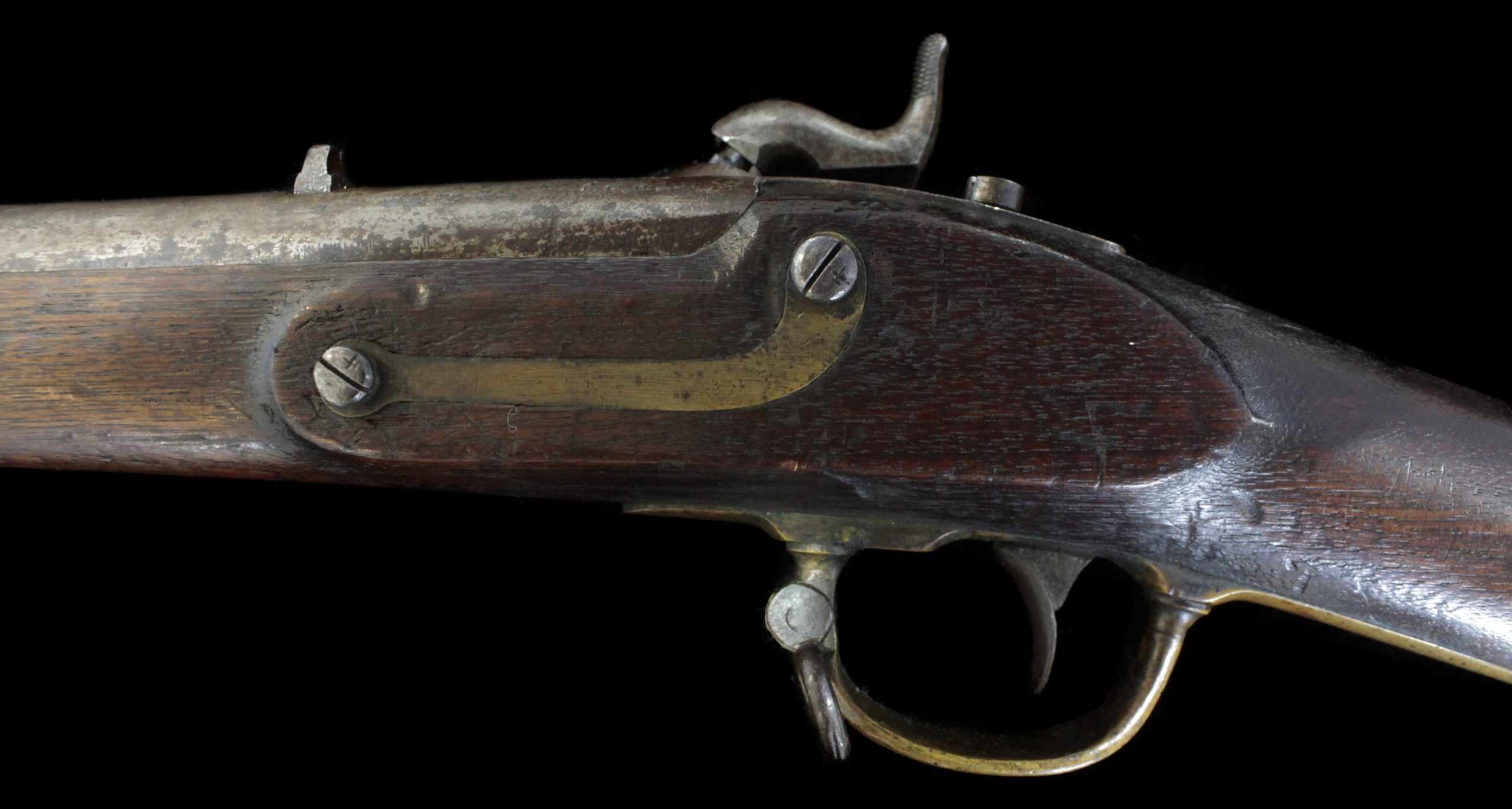
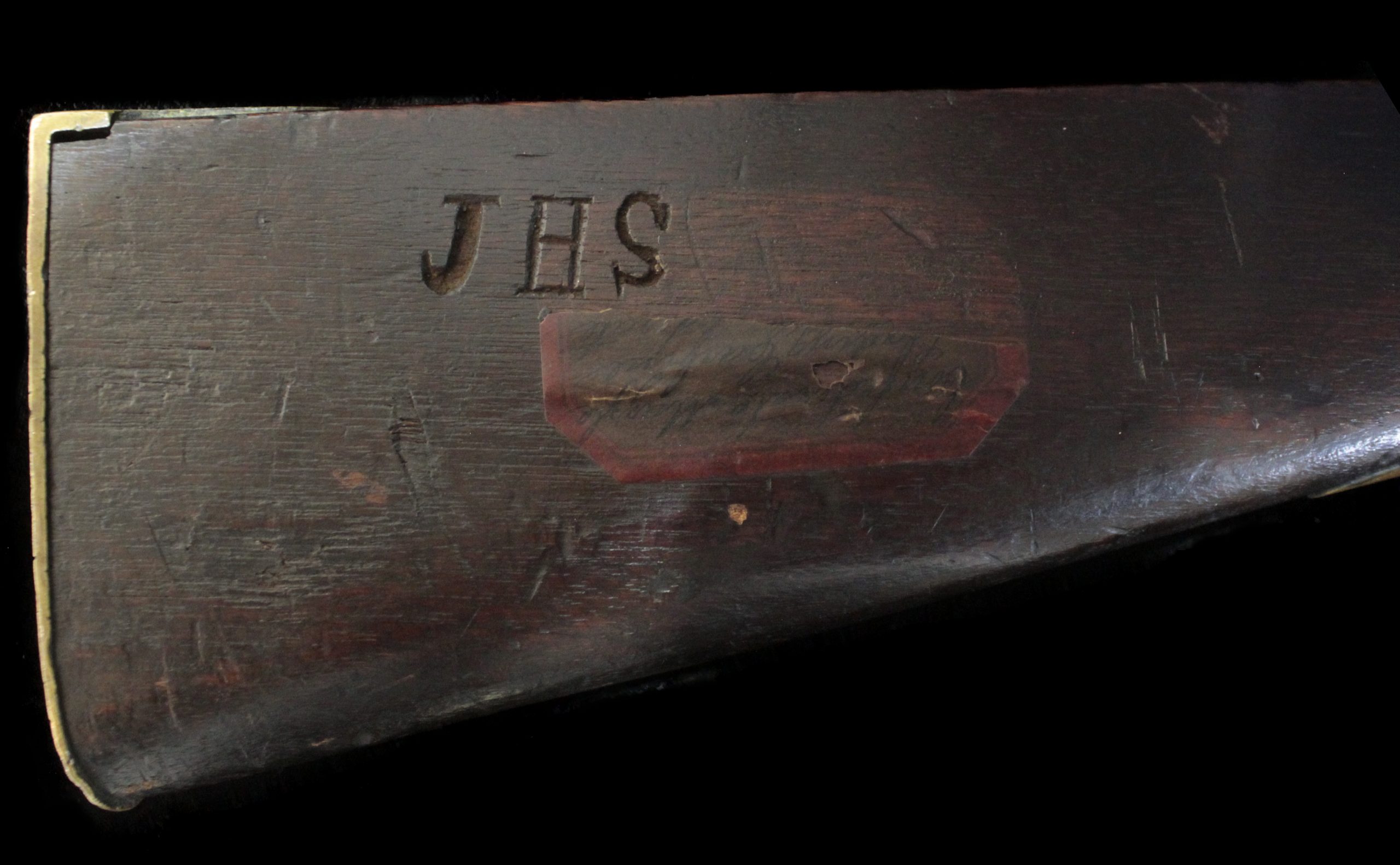
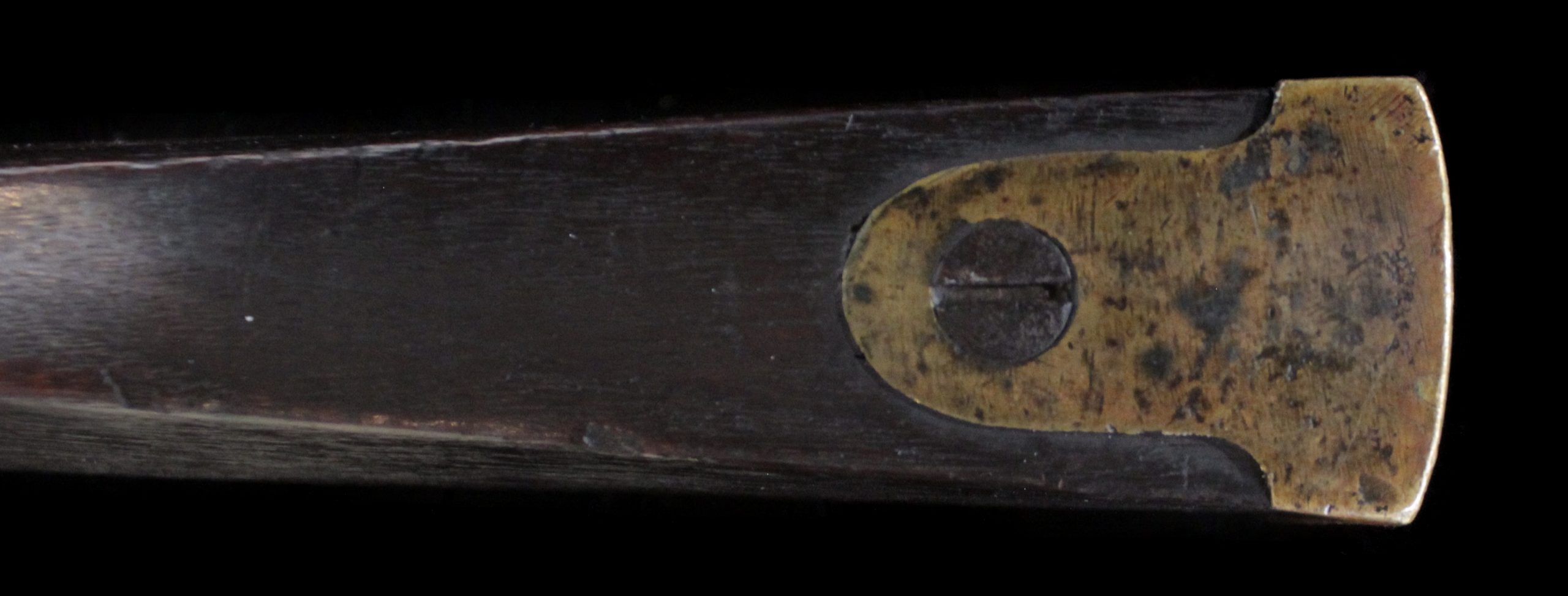
The J.P. Murray, Columbus GA cavalry carbine shown here is thought by many to be the best extant example of this rare carbine.
The Greenwood & Gray company of Columbus, GA. was a partnership between the brothers John D. & William C. Gray and Eldridge S. Greenwood. Murphy & Madaus concentrate on William Gray and Eldridge Greenwood, noting that “less is known about John D. Gray”. While William and Eldridge may have been the day-to-day operators of the production facility in Columbus, GA, it is quite clear from my additional research that the driving force, financial backing and political connections to establish and operate the arms manufactory were all directly attributable to John D. Gray. John and William Gray emigrated to South Carolina as children. By the 1820s they had a successful construction business that built roads, buildings, and rail lines in several states.
The Gray’s diverse businesses included everything from a steamboat line and a textile mill in South Carolina to furniture making factory and mining in north Georgia near the Tennessee line, and founded “Graysville”. One of the business ventures in Columbus, GA was Greenwood & Gray, a rope manufactory that occupied the third floor of the Carter Mill building. Other tenants of the building during mid-1861 were A.D. DeWitt (a sword maker) on the first floor, painted canvas and accoutrement maker Brands & Korner on the second floor, and Haiman & Brother (another sword maker) on the fourth floor. DeWitt moved out of the building by the fall of 1861 as did the Haiman operation due to its expansion.
It was in the Carter Mill building, that John D. Gray would establish his Columbus Armory. Gray was already doing substantial business with the Confederate government before he announced to Confederate Chief of Ordnance Josiah Gorgas on May 26, 1862, that “I have in operation a manufactory of small arms at Columbus in this State and am now turning out about six guns per day – after the Harpers Ferry or Mississippi rifle pattern and will have two hundred stand on hand in a few days.”
A few days later, Gray wrote to Captain Richard Cuyler at the Macon Arsenal stating that I…”have a contract with the Ordnance Department at Knoxville – approved by the department at Richmond, for making two hundred rifles and one thousand carbines. This contract is to be completed in eight or nine months.”
He had delivered 122 rifles in July, 1862, but his first 79 carbines were delivered on August 2nd, and on September 16th, he delivered a hundred more. Another hundred were delivered on October 16th. He delivered his final 69 carbines to the Confederate Government on November 12th, 1862, for a total of 348. He also delivered 73 additional carbines to the State of Alabama.
After the war, Gray dedicated himself to rebuilding Graysville as well as much of the infrastructure that had been destroyed by the Union army in the Georgia, including bridges and railroads. Gray worked diligently at these projects until his death in Graysville on November 17, 1878.
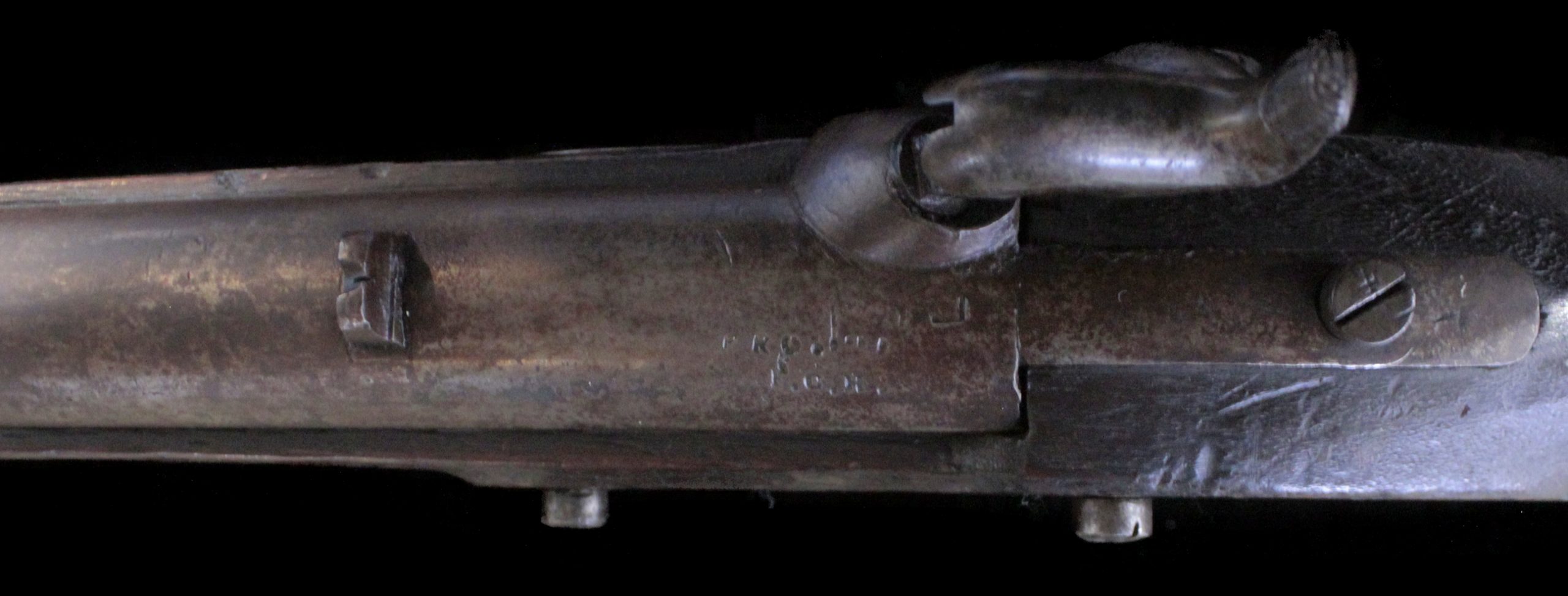
The locks on most examples are stamped in two lines, forward of the hammer, J.P. MURRAY over COLUMBUS, GA. This marking has led to these arms being known as “JP Murray” rifles, when they are really the work of John D. Gray’s Columbus Armory located at the Greenwood & Gray premises. The mark is that of John P. Murray, a gunsmith who had been working in Columbus, GA prior to the outbreak of the war. Murray’s story is somewhat interesting in that, like the Gray brothers, he hailed from South Carolina. Murray had been in a gun making partnership in Charleston with Benjamin G. Happoldt. The firm of Happoldt & Murray operated in Charleston from about 1856 until the partners relocated to Columbus, circa 1859-1860. Benjamin was the brother of John H. Happoldt, another Charleston, SC gunsmith who would alter numerous US M-1841 Mississippi Rifles to accept saber bayonets for the Confederacy during the early months of the war. When Gray established his rifle works, he hired Murray as his foreman and master armorer. The stamp used on the Gray’s Columbus Armory manufactured rifle and carbine locks is the same one Murray had used in his civilian gun making business, and a handful of civilian rifles are known with this mark as well. At least one carbine is known with a COLUMBUS ARMORY marked lock, suggesting that towards the end of production a new stamp was finally procured. The other markings and features on that gun are like those associated with the other known “Greenwood & Gray” / “JP Murray” arms, indicating that they came from the same shop. Most examples of Gray’s rifles and carbines are stamped with two inspection marks on the upper left breech, the letters PRO for “proved” and the letters FCH for Captain (eventually Major) F.C. Humphries of the Columbus Arsenal, who inspected most of the arms produced in Gray’s facility. The bottoms of many of the barrels also bear the “Maltese Cross” or “windmill” inspection mark of Nathan D. Cross, a Selma Arsenal inspector who inspected many of the Columbus made barrels. The only other markings typically associated with the guns are the letters ALA and a date (usually 1864) on the Alabama contract guns, which are usually stamped on the barrel above the other inspection marks. Also, the tops of the barrels of most of the guns produced with Boyle & Gamble bayonet adapter rings appear to have been stamped with the number of the ring and bayonet to mate these parts. Internally, the lock, hammer neck and sometimes the bottom of the barrel are stamped with assembly numbers that some consider to be serial numbers as well. In some cases, the lock screw heads are numbered as well, as on the Columbus Armory marked carbine and at least two Type II rifles. From examination of several extant examples, it appears the numbers are only batch or assembly numbers as very low numbered examples of “Type II” guns (including single digits) are known, and it seems almost definite that these guns were produced later than the “Type I” examples.
OS-7645
$35,000.00
Contact Us:
Email: oldsouthantiques@gmail.com Phone: (804) 543-4597